Showing posts with label afghanistan. Show all posts

Monday, July 21, 2008

The Costs of War: The Parents' Agony


Friday 18 July 2008
by: Ann Wright, t r u t h o u t | Perspective


Every day for a parent of a person in the United States military is a long day, filled with concern for their daughter or son. Parents of nine US Army soldiers were notified of the deaths of their family members in Afghanistan this week.

July 16 and 17, 2008 have been extraordinarily long days for another group of parents.

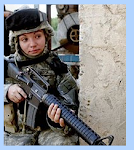
In Washington, DC, on July 17, 2008, John and Linda Johnson, the parents of US Army Private First Class (PFC) Lavena Johnson, met US Army criminal investigators concerning the classification of the death of their daughter, who died three years ago on July 19, 2005 in Balad, Iraq. The Army labeled her death a suicide, despite evidence from materials the Army reluctantly provided to the parents that she was beaten, bitten, sexually assaulted, burned and shot. Despite numerous questions from Dr. John Johnson about the Army's investigation and determination of suicide, the Army stuck to its guns, saying that Lavena Johnson committed suicide. After the briefing, the Johnsons asked Congressman William Lacy Clay and Congresswoman Diane Watson to request that House Oversight and Governmental Reform Committee Chairman Henry Waxman hold hearings, requiring the production of witnesses to testify under oath to their knowledge of how Lavena died - an attempt to get information that the Army has so far failed to provide.

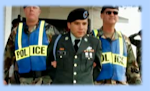
On July 16, 2008, at Fort Knox, KY, Helen and Eric Burmeister, the parents of PFC James Burmeister, attended the court-martial of their son.
After being in three IED explosions in Iraq, . . .

Afghanistan can no longer be ignored

The Taliban Strikes Back
Monday 21 July 2008 by: Gary Brecher, AlterNet

After six years of ignoring Afghanistan, things have gotten bad enough to force American officials to pay attention. For the past two months, U.S. casualties in Afghanistan have been higher than in Iraq. And on July 13, Afghanistan definitely got everybody's attention when nine U.S. troops were killed in what Wikipedia is now officially calling "The Battle of Wanat." Three days after the battle, the International Security Assistance Force (ISAF), the U.S.-dominated military force running the country, announced it's abandoning Wanat completely.

The outpost that the United States had just set up in Wanat was supposed to disrupt Taliban supply lines from Pakistan. Instead, it became a tempting target for the local guerrillas, just like hundreds of other remote forward bases in other rural guerrilla wars from Southeast Asia to Algeria. Guerrillas usually avoid open combat with conventional forces, but when they do attack in force it's usually against the smaller, more vulnerable forward bases. The Wanat base was a very tempting target because it was still under construction.

It's not so easy to be sure what actually happened in the battle there on July 13 . . .

Tuesday, June 3, 2008

Iraq War Documentaries


THE OIL FACTOR: BEHIND THE WAR ON TERROR (2005)
"After assessing today's dwindling oil reserves and skyrocketing use of oil for fuels, plastics and chemicals, "The Oil Factor" questions the motives for the U.S. wars in the Middle-East and Central Asia where 3/4 of the world's oil and natural gas is located."

A COMPANY OF SOLDIERS (2004)
"In "A Company of Soldiers," Frontline reports from inside the U.S. Army's 8th Cavalry Regiment stationed in Baghdad for an up-close, intimate look at the dangers facing an American military unit in Iraq. Shot in the weeks following the U.S. presidential election, the film tracks the day-to-day challenges facing the 8th Cavalry's Dog Company as it suddenly has to cope with a dramatic increase in attacks by insurgents." -washingtonpost.com

NO END IN SIGHT (2007)
"Chronological look at the fiasco in Iraq, especially decisions made in the spring of 2003 - and the backgrounds of those making decisions - immediately following the overthrow of Saddam: no occupation plan, an inadequate team to run the country, insufficient troops to keep order, and three edicts from the White House announced by Bremmer when he took over: no provisional Iraqi government, de-Ba'athification, and disbanding the Iraqi armed services. The film has chapters (from History to Consequences), and the talking heads are reporters, academics, soldiers, military brass, and former Bush-administration officials, including several who were in Baghdad in 2003."

MISSION ACCOMPLISHED (2004)
"This guy has a lot of balls and curiousity. He takes a video camera and an interpreter to the major conflict areas of Iraq and shows what the average citizen and the extremists believe and what the US soldiers are facing day-to-day. Unadulterated realism. Highly recommended."

THE LOST YEAR IN IRAQ (2006)

"Weeks after the toppling of a statue of Saddam Hussein in Baghdad, ambassador L. Paul Bremer and a group of administrators went to Iraq with the goal of establishing a democracy. One year later Bremer left, but a growing insurgency and broken economy have continued to pose a challenge to U.S. troops and the young Iraqi government." -washingtonpost.com

THE FIFTH ESTATE : THE LIES THAT LED TO WAR
"Since the US-led invasion four years ago, the fifth estate has covered Iraq and the war on terror from virtually every angle--the military, media, intelligence, politics--revealing aspects of the story that you didn't find anywhere else. Now, as the White House warns about the latest threat in the region, this time from Iran, it's worthwhile looking back to examine the deception, suspect intelligence, even lies, that convinced the world of the rightness of targeting Saddam Hussein."